Updated:
Cloud adoption in Türkiye involves more than moving an application to a remote server. Businesses need to connect their operating requirements with available services, connectivity, skills and data responsibilities. National trends can provide context, but the case for an individual project should rest on a defined workload and measured results.
Enlarge illustration →
Read adoption evidence in its original scope
A survey of businesses, a data-centre investment announcement and a provider’s customer count measure different things. When referring to Türkiye’s digital development, record the publisher, survey population, reporting period and definition of cloud use. Do not turn an earlier report into a current market estimate.
TÜİK’s published datasets are a starting point for official statistical context. A national result does not show that every sector, region or company has the same readiness. Local connectivity and the organisation’s operating skills still matter.
Choose a service model before assigning responsibilities
| Model | Typical decision to clarify |
|---|---|
| Infrastructure as a service | Who operates the guest system and application? |
| Platform as a service | Which runtime and deployment limits apply? |
| Software as a service | How are users, data and configuration managed? |
NIST’s service-model definitions are useful vocabulary, not a replacement for a service agreement. Verify the actual product scope, backup arrangements, support responsibilities and exit options. The word cloud does not imply that every application task is managed.
Treat data location and data protection as separate questions
A workload may have requirements for storage location, administrator access, subprocessors and transfers. Establish what personal data is processed, the purpose and the parties involved. Hosting in a particular country alone does not establish compliance with all applicable obligations.
For projects involving Türkiye’s personal-data law, review current KVKK materials and obtain the assessment appropriate to the organisation’s role and processing activity. Translate those decisions into access rules, retention periods and documented data flows.
Test the complete application path
Measure the application from the locations where employees or customers will use it. Network latency, database calls, external services and browser performance can each affect the result. A larger server may not solve a slow integration or an inefficient query.
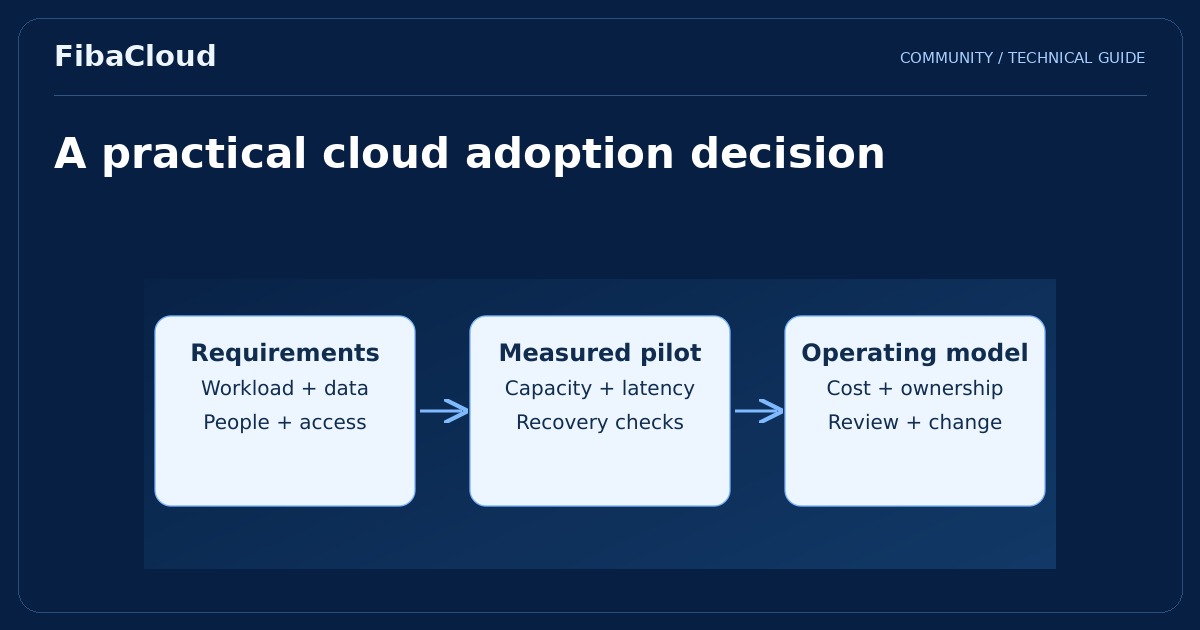
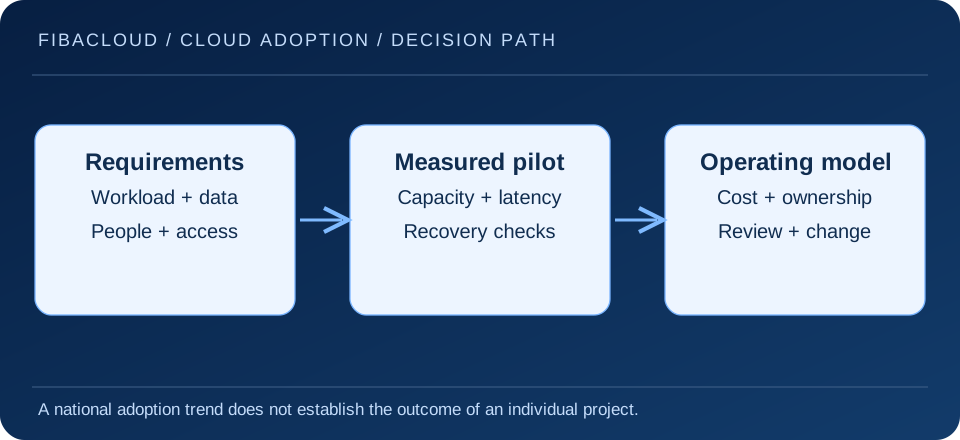
Use a representative pilot with realistic data protection controls. Record resource use, response-time distribution, failure behaviour and recovery steps. Include connectivity interruptions and the return path to the previous environment in the migration plan.
Budget for operation and change
Compute and storage are only part of the cost. Add data transfer, software licences, monitoring, backup, migration work and the people who operate the system. Confirm billing rules and the payable amount in the selected service’s current terms.
Build skills alongside the infrastructure. An owner for patching, access reviews, incidents and restore tests makes the operating model clearer. Expand the pilot when the evidence supports it, rather than assuming a national growth story guarantees a successful migration.
Frequently asked questions
- Does cloud adoption always reduce cost?
-
No. The result depends on utilisation, architecture, licensing, data movement and operating work. Compare the complete current and proposed costs using the same scope.
- Does local hosting automatically satisfy data-protection requirements?
-
No. Location is one factor. Processing purpose, access, transfers, security and other obligations need their own assessment.
Your next step
Use the FibaCloud plan finder to compare resource requirements, then assess application operation and data responsibilities alongside the plan.